
Color That Penetrates Instead of Sitting on Top
Concrete Staining in Iola for transforming plain slabs into finished surfaces without adding a coating layer
Concrete that's structurally sound but visually unappealing creates a decision point—coat it with epoxy or stain it to add color while leaving the surface texture unchanged. Cornerstone Coatings LLC applies concrete staining for residential patios, interior floors, and commercial spaces across the Brazos Valley where property owners want color depth without the glossy finish or thickness that coatings add. Stains penetrate the concrete substrate through chemical reaction or absorption, meaning the color becomes part of the slab rather than a separate layer that can peel or delaminate.
The process begins with surface preparation to remove sealers, oils, and contaminants that would block stain penetration, followed by application of acid-based or water-based stain depending on the desired color range and substrate condition. Acid stains react with calcium hydroxide in the concrete to produce earthy tones—browns, tans, greens, and terra cotta—while water-based stains offer a broader palette including blues and reds by depositing pigment particles into the concrete pores.
Schedule a property evaluation to assess concrete condition and discuss whether acid or water-based stain will produce your desired color on your specific slab..
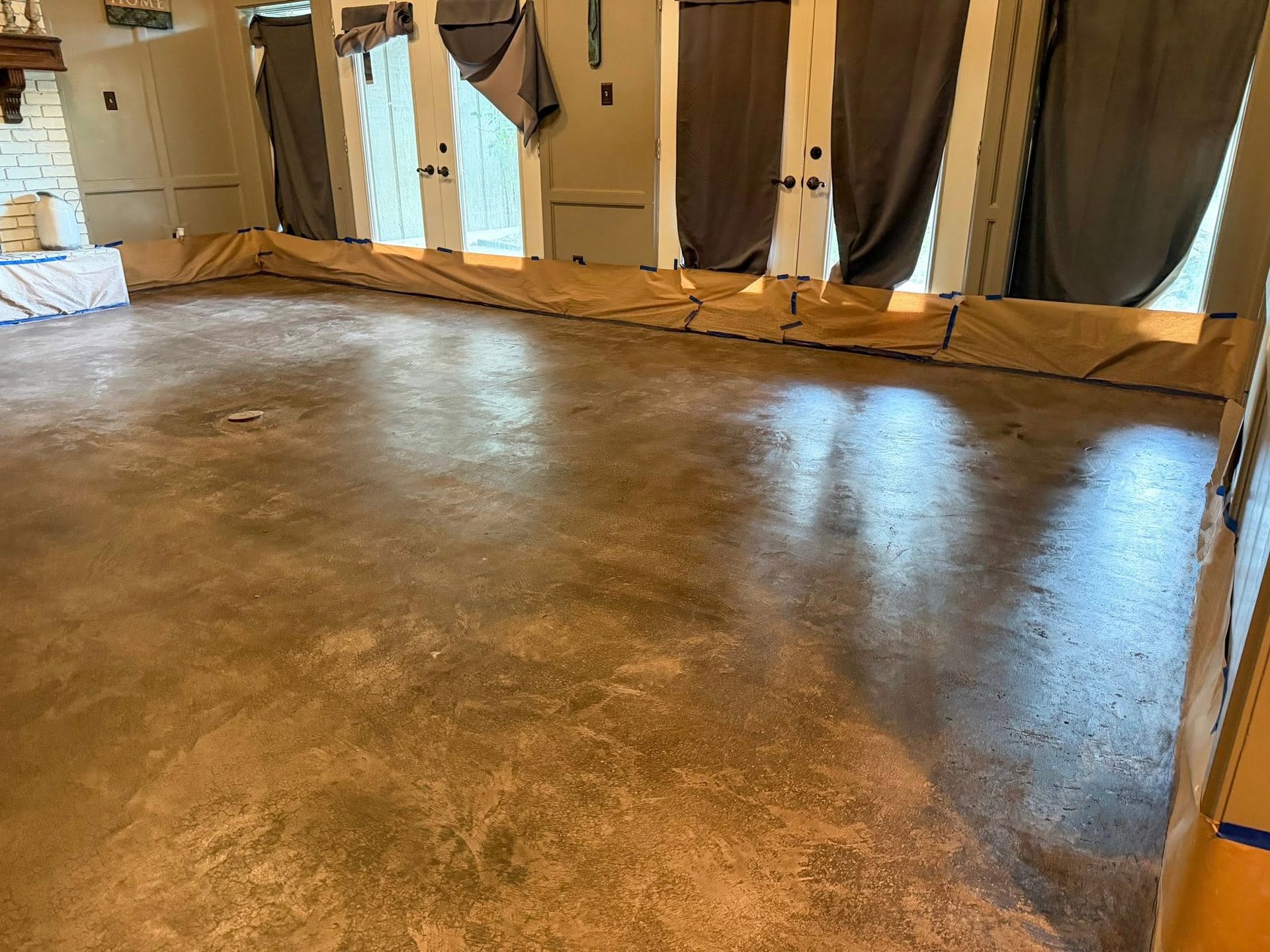
What Determines Final Stain Color
Stain color varies based on concrete composition and age—older slabs with higher lime content react more intensely to acid stains, while newer concrete may produce lighter tones from the same product. Water-based stains provide more predictable color because they don't rely on chemical reaction, but they still appear differently on porous versus dense concrete because absorption rate affects pigment concentration at the surface.
After staining completes and residue is cleaned away, the floor displays translucent color with natural variation that mirrors the concrete's underlying texture—trowel marks, aggregate patterns, and minor surface imperfections remain visible, which is the intended aesthetic rather than a defect. The stain won't chip or peel because there's no coating layer to fail, though high-traffic areas will show wear as the surface abrades over years of use.
Sealer application after staining is optional but recommended for interior floors and patios to reduce staining from spills and slow surface wear. Texas climate affects stain performance primarily through substrate temperature during application—hot concrete causes stains to dry faster, reducing working time and potentially creating uneven absorption if not managed carefully..
What Property Owners Usually Ask
Homeowners and business managers in Iola and College Station frequently want to understand how stained concrete performs compared to coatings and what maintenance requirements they should expect.
What's the difference between acid stain and water-based stain for concrete?
Acid stains chemically react with concrete to produce variegated, earth-tone colors that can't be precisely controlled—water-based stains deposit pigment mechanically for more uniform color and a wider palette, but they don't create the same mottled, natural appearance that acid reactions produce.
How long does concrete stain last before fading or wearing away?
Stain color is permanent because it penetrates into the concrete matrix, but surface abrasion from foot traffic or vehicle tires will eventually wear through the stained layer to expose unstained concrete below—this takes years in low-traffic areas and happens faster on driveways or commercial floors without protective sealer.
Why does stained concrete look different across the same slab?
Color variation occurs because concrete density, moisture content, and chemical composition aren't uniform throughout a pour—areas with more aggregate absorb less stain, troweled sections react differently than broomed surfaces, and existing stains or residues block penetration, creating the characteristic mottled appearance.
When should I stain concrete instead of applying epoxy coating?
Staining suits projects where you want to preserve the concrete's natural texture and appearance while adding color, or where coating thickness and glossy finish are undesirable—epoxy coatings provide superior protection and durability but completely change the surface character.
How much does sealing add to the cost of concrete staining?
Sealer application typically adds cost per square foot depending on product type and number of coats, but it significantly extends stain life by preventing liquid penetration and reducing abrasive wear—unsealed stained concrete in Texas homes absorbs spills and shows traffic patterns within months.
Cornerstone Coatings LLC applies staining as part of the core service menu for residential and commercial properties throughout the 70-mile service radius from College Station. Arrange a consultation to review stain color samples on concrete similar to your substrate and discuss sealer options based on your traffic expectations.