Floors Built for Problems Others Can't Solve
Custom Tailored Coating Solutions in Iola for concrete conditions that standard epoxy systems won't address
Cornerstone Coatings LLC designs custom coating systems by starting with on-site concrete evaluation—measuring substrate condition, moisture content, and existing surface damage before selecting a bespoke epoxy formulation matched to your specific challenge. Not every concrete floor fails the same way, and properties across the Brazos Valley face different problems depending on soil movement, previous coatings, and how the slab was originally poured. You get a coating system built around what your concrete actually needs, not what's easiest to install.
This service addresses concrete that's been rejected by other contractors—floors with unusual moisture issues, substrates with prior coating failures, or surfaces requiring performance specifications beyond standard residential epoxy. The process involves matching epoxy chemistry to substrate condition, which means the primer, base coat, and topcoat are selected individually rather than pulled from a one-size kit.
Schedule an on-site concrete evaluation to identify the specific conditions affecting your floor and review formulation options..
Why Substrate Condition Determines Coating Performance
Custom coating design begins with understanding what's happening below the surface—concrete pH, porosity, and structural integrity all affect whether a coating will bond or delaminate within months. Cornerstone Coatings measures these factors during assessment and selects primer chemistry that compensates for substrate weaknesses, which is why floors with previous coating failures or moisture intrusion require site-specific formulation rather than off-the-shelf products.
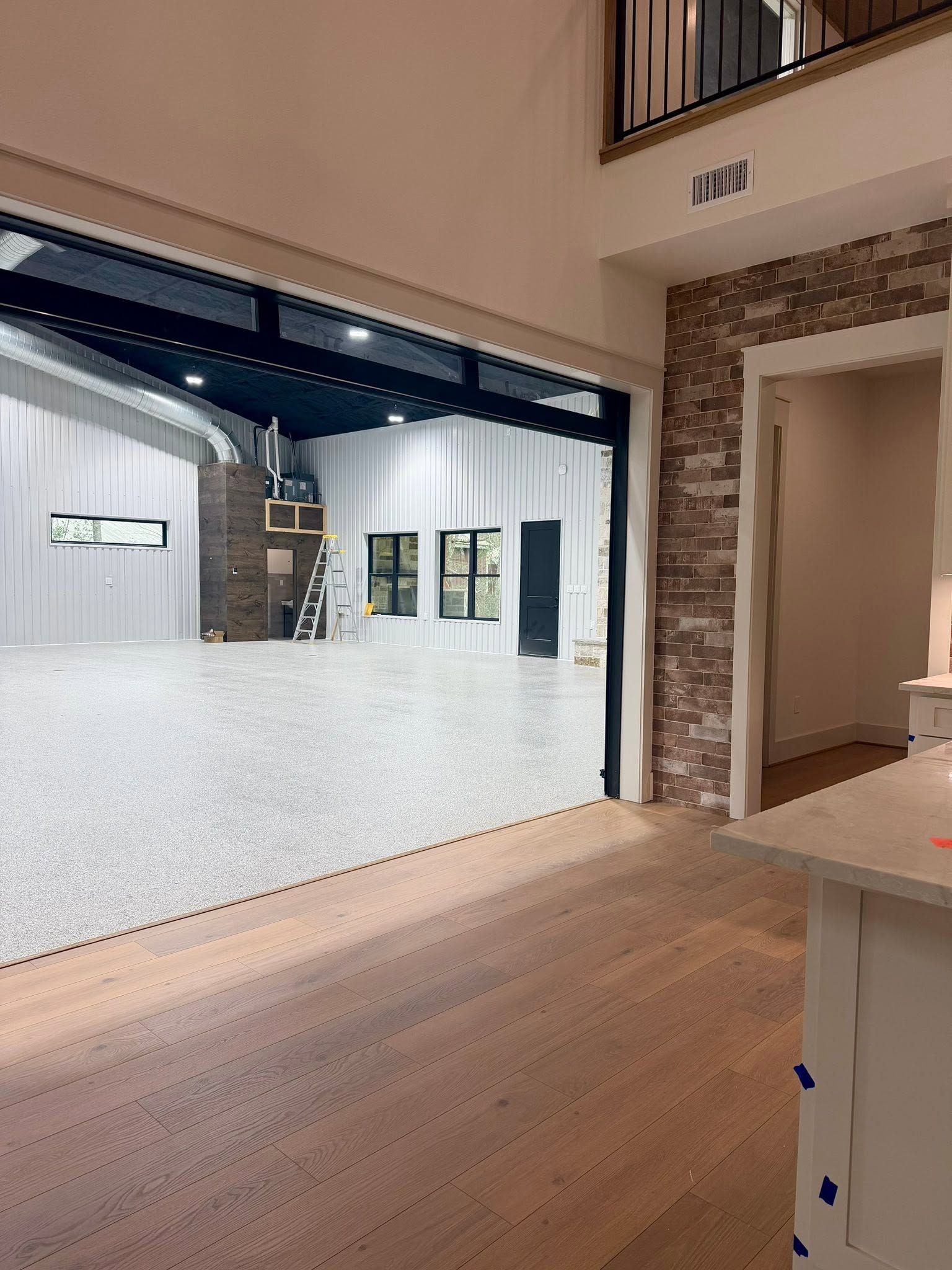
Once the system is installed, you'll notice the coating remains intact under conditions that would cause standard epoxy to bubble or peel—no edge lifting around drains, no discoloration from subsurface moisture, and no bond failure where old coatings were removed. The floor performs because the chemistry was matched to the concrete's actual condition rather than assumed to be universal.
The two-person crew structure allows focused attention throughout each project phase, and installation oversight ensures that mixing ratios, cure times, and application techniques align with the custom formulation's requirements. Complex jobs within the 70-mile service radius from College Station benefit from this deliberate approach rather than high-volume production scheduling..
Questions Before Designing Your System
Property owners in Iola and throughout the Brazos Valley often ask how custom formulation differs from standard coating packages and what site conditions require tailored solutions.
What makes a concrete surface require custom coating rather than standard epoxy?
Concrete with previous coating failures, high moisture vapor emission rates, unusual pH levels, or structural movement needs chemistry adjusted to bond under those specific conditions—standard kits assume ideal substrate conditions that don't exist on problem floors.
How does on-site evaluation determine which epoxy formulation to use?
Surface prep reveals concrete porosity and existing damage, moisture testing measures vapor transmission, and pH testing identifies alkalinity levels; these measurements determine primer type, epoxy viscosity, and topcoat hardness needed for long-term adhesion.
What does custom color blending add to the installation process?
Pigment ratios are adjusted during mixing to match architectural samples or existing finishes, allowing metallic effects or solid colors that aren't available in pre-packaged kits—you get the exact visual result specified rather than the closest available option.
When should I schedule assessment for a custom coating project?
Assessment should happen before budget finalization, since substrate condition directly affects material selection and cost—discovering high moisture or bond failure risk after quoting leads to change orders, while early evaluation allows accurate pricing from the start.
How much does custom formulation typically add to project cost compared to standard systems?
Custom systems cost more per square foot because materials are sourced individually and installation requires stricter process control, but the cost reflects chemistry matched to your concrete's condition rather than hoping a universal product works—you pay for a system designed not to fail.
Cornerstone Coatings LLC builds coating systems around the concrete conditions found during evaluation rather than forcing substrates to accept standard products. Request a detailed estimate after site assessment to review formulation recommendations and performance specifications for your floor.